
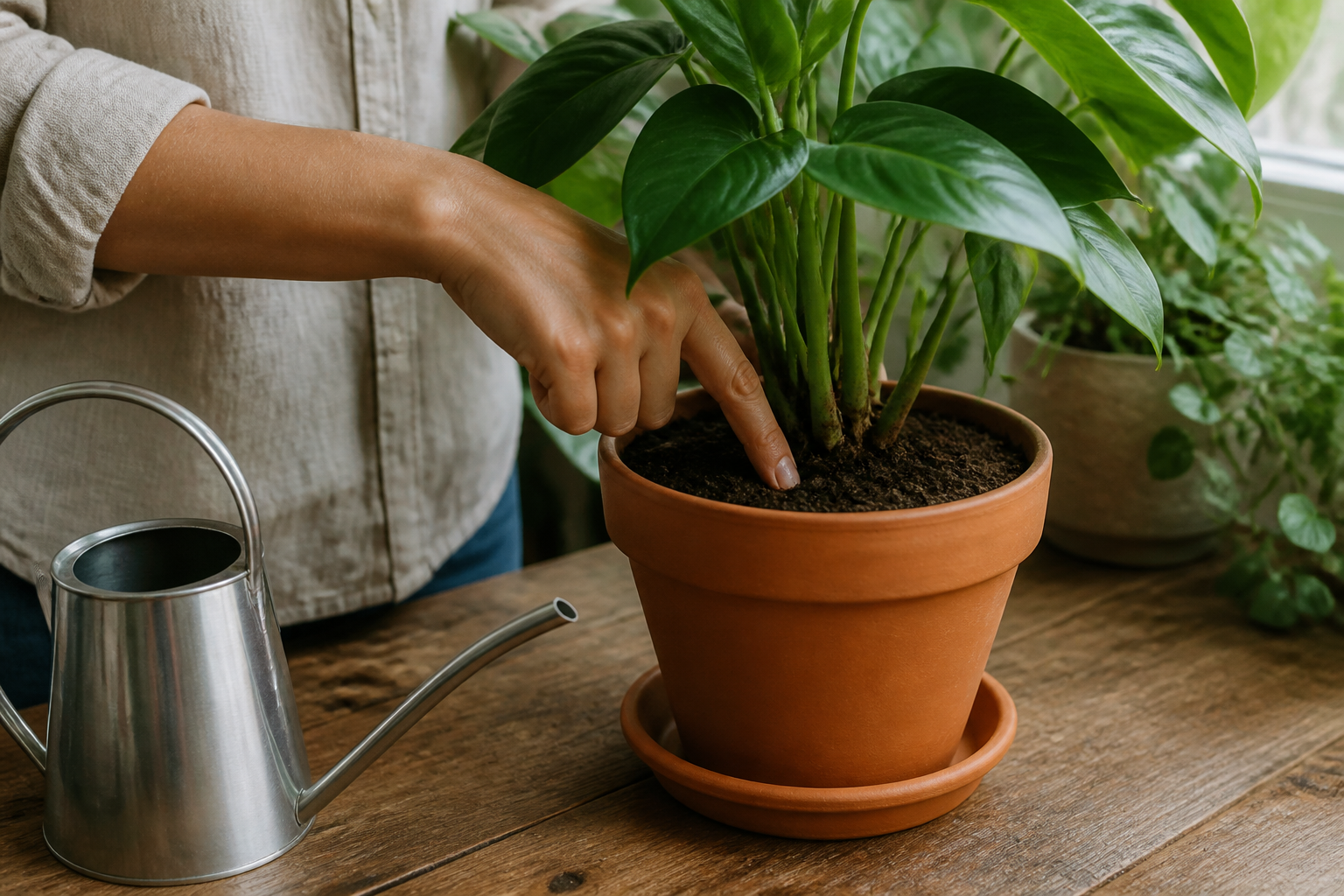
Watering looks simple, yet it is the source of many indoor plant problems. The difficulty is that plants do not use water at a fixed rate. Light, temperature, pot size, soil, season, and root health all change how quickly a container dries. A reliable routine therefore begins with checking the plant, not checking the calendar.
Why weekly schedules often fail
A reminder can be useful for inspection, but it should not automatically trigger watering. A plant near a bright summer window may dry quickly, while the same plant may remain moist much longer during a cool, cloudy week. Watering both situations on the same day can leave roots constantly wet.
Check below the surface
The top of the pot can appear dry while moisture remains around the roots. Insert a clean finger or wooden skewer several centimeters into the mix. If it comes out cool and damp, wait. If it is mostly clean and dry, the plant may be ready for water. For larger pots, lifting one side can also help: a dry container usually feels noticeably lighter than a freshly watered one.
Learn what the leaves are communicating
Drooping does not always mean thirst. Both dry roots and damaged, waterlogged roots can leave a plant unable to support its leaves. Combine visual clues with a soil check. Soft yellowing leaves, a persistently heavy pot, fungus gnats, and a stale smell suggest the mix may be staying wet too long. Crisp edges and dry soil point in a different direction.
Water thoroughly when it is time
Apply water slowly across the soil surface until a small amount drains from the bottom. This helps moisten the root zone evenly and reduces dry pockets. Empty the saucer afterward. A few small sips may wet only the surface, encouraging shallow roots while the center of the pot remains dry.
Drainage is part of watering
A decorative container without a drainage hole can trap excess water. Keep the plant in a nursery pot with holes and remove it for watering, or use a properly drained pot inside the decorative cover. Never assume that a layer of stones at the bottom replaces a drainage opening.
Adjust for pot and soil
Small pots dry faster than large ones. Terracotta loses moisture through its walls, while glazed ceramic and plastic retain it longer. A loose mix containing bark and mineral particles may drain quickly; a dense peat-heavy mix can stay wet for days. These differences explain why two similar plants in the same room may require different timing.
Seasonal changes matter
Many houseplants grow more slowly when days shorten. Less growth usually means slower water use. Reduce frequency, but continue checking rather than imposing a winter rule. Heated rooms can still become warm and dry, and plants under grow lights may remain active throughout the year.
Build a simple observation log
Once or twice a week, note soil moisture, pot weight, and leaf condition. Record the date only when you actually water. After several cycles, a useful pattern will emerge. The goal is not to create an inflexible schedule; it is to understand how the plant responds in your particular home.
Common mistakes to avoid
- Watering every plant on the same day without checking the soil.
- Leaving pots standing in water.
- Using tiny amounts so frequently that the root zone never becomes evenly moist.
- Repotting into an oversized container that stays wet for too long.
- Assuming every yellow leaf indicates a need for more water.
A calmer approach
Consistent plant care comes from a repeatable process: inspect, test the soil, water thoroughly when needed, and allow drainage. With practice, these checks take only a minute and provide far better information than a generic calendar.
Leave a Reply