
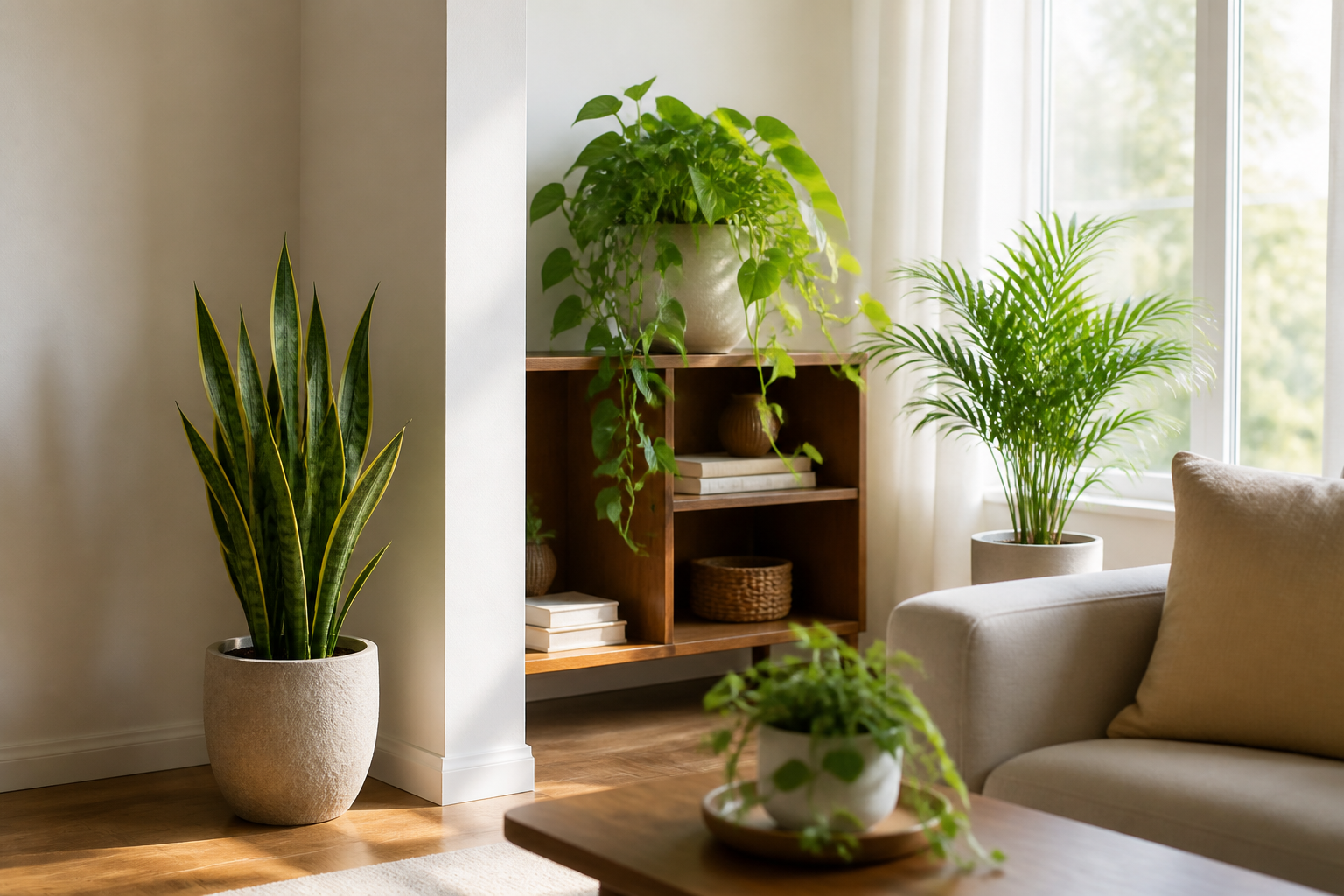
The best indoor plant is not necessarily the most dramatic one in the shop. It is the plant whose needs match the conditions you already have. Choosing that match before buying saves money, prevents frustration, and gives the plant a far better chance of adapting to its new home.
Begin with light, not appearance
Observe the room at several times of day. A south- or west-facing window may provide hours of strong light, while a north-facing room may remain softly lit. Buildings, balconies, curtains, and nearby trees can reduce the light that actually reaches a plant. Instead of relying only on the direction of the window, notice whether the room receives direct sun, bright indirect light, or mostly low light.
Strong direct sun suits only plants that tolerate it. Bright indirect light works for many common foliage plants. Low light does not mean no light: every living plant still needs enough light to grow. If you cannot comfortably read in the room during the day without turning on a lamp, most plants will struggle there unless you add a suitable grow light.
Match the plant to the room
Living rooms often provide the greatest flexibility because they tend to have larger windows and more floor space. A medium floor plant can anchor an empty corner, while a trailing plant can soften a shelf. Bedrooms benefit from compact plants that do not crowd bedside surfaces. In kitchens, choose plants that can handle small changes in temperature and keep them away from hot appliances and greasy cooking areas.
Bathrooms can suit humidity-loving plants when they also have adequate natural light. A windowless bathroom is not automatically a good plant location simply because it is humid. Entryways are often darker and experience temperature changes when doors open, so resilient low-light plants are a better starting point than delicate tropical varieties.
Consider humidity and temperature
Most common houseplants are comfortable in the same stable temperatures people prefer. Problems arise beside heaters, air-conditioners, cold windows, and exterior doors. Dry air can cause leaf edges to brown, while constantly damp air with poor circulation may encourage fungal problems. Grouping plants can slightly improve local humidity, but it does not replace appropriate watering and airflow.
Measure the available space
Check both the current size and the likely mature size. A small nursery plant may eventually need a larger pot and a wider position. Measure shelves before buying and make sure a hanging plant will not block a walkway. Leave enough room to rotate the pot, inspect the leaves, and water without damaging furniture.
Be realistic about your routine
If you travel frequently or often forget to water, avoid plants that require consistently moist soil. If you enjoy checking plants every morning, a species needing closer observation may be rewarding. The right choice supports your normal schedule instead of demanding a completely new lifestyle.
Think about children and pets
Some popular houseplants can irritate people or animals when chewed or handled. Before buying, verify the plant’s identity and check reliable safety guidance for your household. Positioning a plant high on a shelf is not always sufficient for climbing cats or curious children. When in doubt, choose a plant widely recognized as appropriate for homes with pets and keep its label for future reference.
Beginner-friendly characteristics
Good first plants tolerate occasional mistakes, show clear signs when they need attention, and do not demand highly specialized humidity. Look for healthy roots, firm stems, evenly colored leaves, and no visible pests. Avoid specimens with webbing, sticky residue, widespread spotting, or a sour smell from the soil.
A seven-day setup checklist
- Day 1: Place the plant in the planned location and remove decorative wrapping that traps water.
- Day 2: Inspect both sides of every leaf and isolate the plant from an existing collection.
- Day 3: Check the soil with a finger or wooden skewer; do not water automatically.
- Day 4: Confirm that the pot drains freely and that no water remains in the saucer.
- Day 5: Observe whether direct sunlight reaches the leaves and adjust the position if needed.
- Day 6: Record the plant name, purchase date, and current condition.
- Day 7: Review the week without repotting or fertilizing unless there is an urgent problem.
Choose for compatibility
A thriving indoor garden begins with honest observation. When light, room conditions, safety, space, and your routine all point in the same direction, the final choice becomes much easier. Select one well-matched plant, learn how it responds, and expand your collection gradually.
Leave a Reply